Karlsruhe lost the fewest customers so far. Today it holds the largest pool of customers about to go.
12.5%churned so far
32at risk now
€38.2Krevenue at risk
Why they leave3.8× the average
Late payment is the loudest signal.
Of customers more than 60 days overdue, 75% have already left.
Where to start
27 customers carry half the money at risk.
Rank the 83 by revenue and the curve bends early. Call these 27 first, the rest can wait for next week.
27= 50% of €99.8K
14= 30% already
This week’s plan
Three moves, 83 customers.
46
Loyalty offers
They switched provider before and will do it again.
35
Payment plans
More than 30 days overdue. Fix the bill, keep the customer.
2
Personal calls
No clear trigger. A conversation finds it.
Customer
City
Tariff
Probability
Revenue
Action
Beyond this week
Four fixes that stop the next 83.
35of 83
Billing
Offer the payment plan at day 30, not day 60.
Past 60 days overdue, 75% leave. Between 31 and 60 days it is still 42%.
54of 83
Retention
Put previous switchers on a loyalty track.
Customers who changed provider before leave twice as often (39%).
27of 83
Pricing
Rework the BasisStrom tariff.
26.5% of its active customers sit above the trigger, highest of six. SmartStrom: 2.5%.
32of 83
Regional
Give Karlsruhe a named retention owner.
Lowest churn history, largest risk pool today. A blind spot, not a safe city.
Counts = at-risk customers in scope per fix; one customer can match several.
Partner
Built on SAP BDC. Read in under a minute every day.
We model your SAP data once in SAP Business Data Cloud. The data refreshes every day, the briefing lands every Monday: what is at risk, why, and what to do next.
SAP Datasphere & BW/4HANASAP BDC architectureSAP Analytics Cloud & storytellingSAP Databricks, ML & agentic BI
SourceSAP systemsS/4HANA · ERP · BW
SourceNon-SAP systemsSQL · cloud apps · files
↓
Business Data Cloud
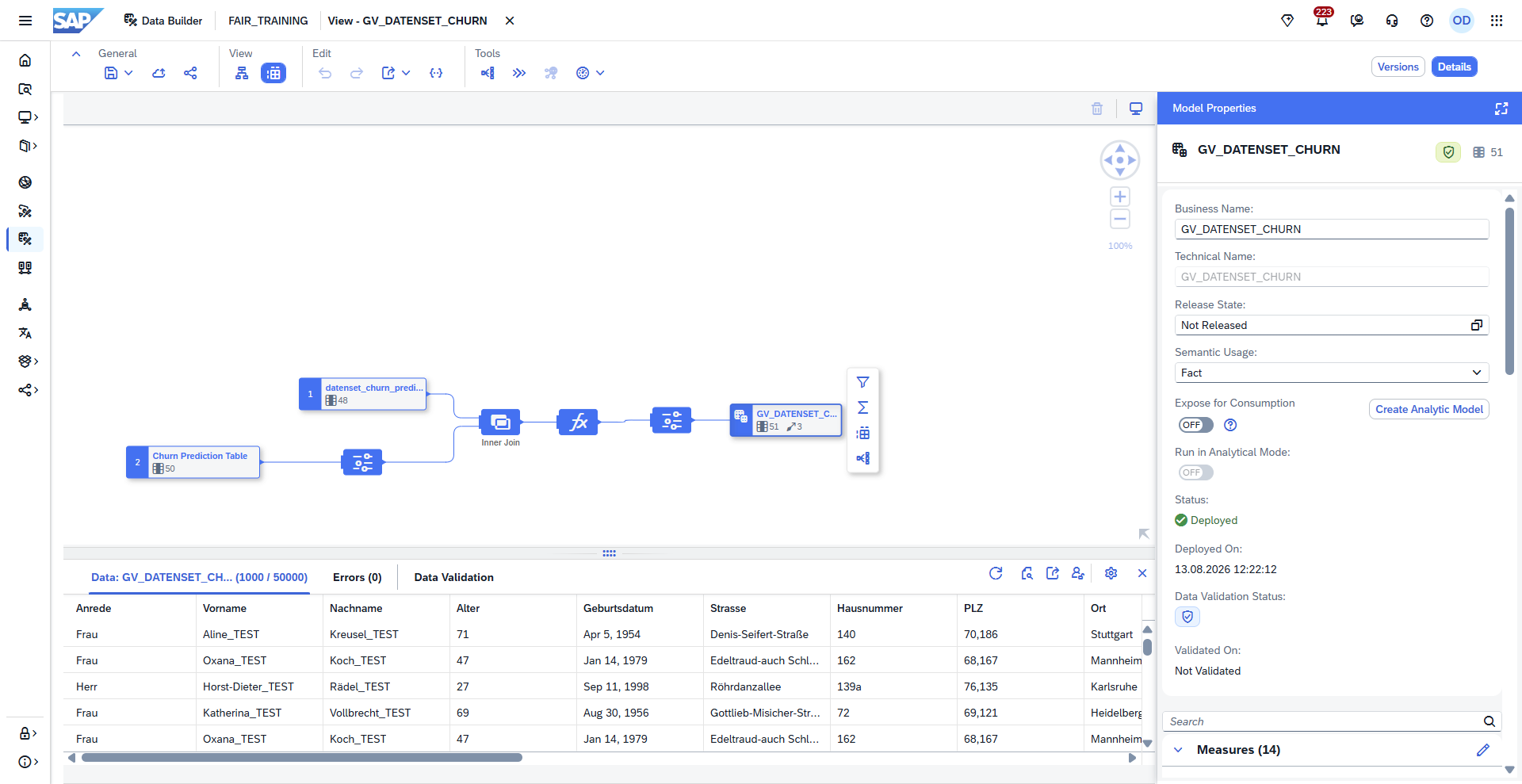
SAP DatasphereAnalytic model AM_DATENSET_CHURNHarmonised customer, contract & billing data
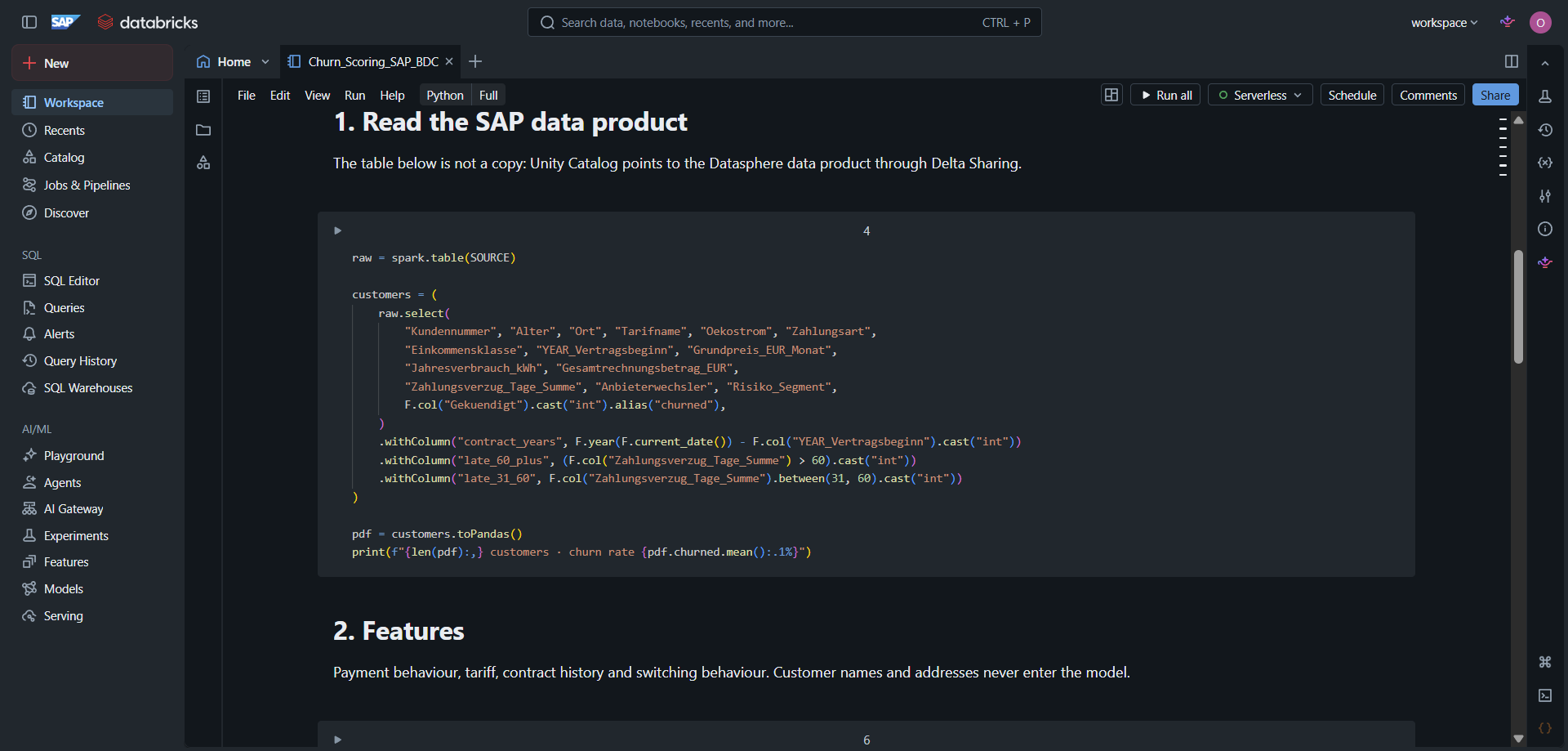
↓Zero-copy Delta Share
SAP DatabricksChurn scoring & MLProbability per customer · risk drivers